Pages

26 Jan 2022

Working policy

There are fewer formal structures in academia than in many other careers and professional life is often interwoven with personal life. In addition, to follow a successful academic career, there is high external pressure to publish and acquire funding. In face of this reality, the following working policy sketches key points for a work environment to foster creative work while allowing for work-life balance.

1. The meaning of our work life

The overarching goal of all work in our group is to contribute to a better world by solving applied research questions around energy, the environment and society. It is easy to lose sight of this when battling with the daily demands of being an academic - writing papers, chasing grants, and dealing with the administrative minutae and politics of academic institutions. It helps to occasionally remind ourselves of the reason for it all, especially during difficult times.

Read more...

About

Research

My group’s research is on the global transition to a 100% clean and renewable energy system. This includes designing future energy systems that are able to work with high shares of variable renewable electricity. A prerequisite for this is understanding the spatiotemporal variability of renewable generation and demand. But to develop a truly sustainable energy system it is also necessary to consider trade-offs between the energy transition and other concerns such as biodiversity protection. → More on my research areas.

Read more...

Funded projects

This is a non-exhaustive and outdated overview of some of the externally funded research projects in my group.

ECEMF

ECEMF, the European Climate and Energy Modelling Forum, has dual aims. The long-term goal is to establish a permanent forum to connect policymakers with energy and climate researchers. In the short-term, a funded European research project is also developing a model-based evidence base to inform European climate and energy policy. One of the models used in the project is the Sector-Coupled Euro-Calliope model, which is developed in our group.

Read more...

Group

Hariadi Aji
PhD candidate (since 2024)
Climate resilient planning for the Indonesian power system
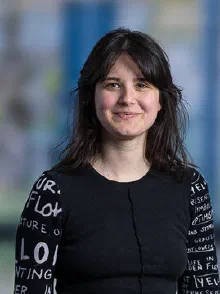
Franziska Bock
Franziska Bock
PhD candidate (since 2021)
Trust, power, and information asymmetry in modelling
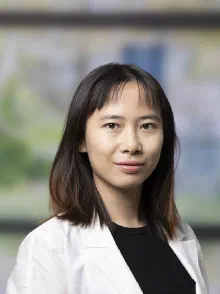
Meijun Chen
Meijun Chen
PhD candidate (since 2023)
Ethically aware modelling
Ema Gusheva
Ema Gusheva
PhD candidate (since 2021)
Idea diffusion in the energy transition model-policy interface
Jann Launer
Jann Launer
PhD candidate (since 2023)
Fine-graining and downscaling energy system models
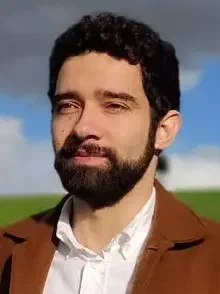
Ivan Ruiz Manuel
Ivan Ruiz Manuel
PhD candidate (since 2023)
Energy system investment pathways and uncertainty
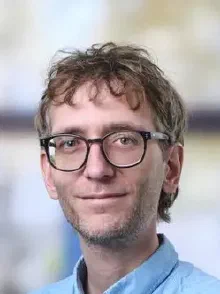
Stefan Strömer
Stefan Strömer
PhD candidate (since 2023)
Applying decomposition methods to energy system optimisation

Alumni

Francesco Sanvito
Postdoc, 2022–2026
Linh Ho
Postdoc, 2024–2026
Fei Wu
PhD graduate, 2020–2024
Senior consultant at Magnus Energy
Francesco Lombardi
Postdoc, 2021–2023
Assistant professor at TU Delft
Arsam Aryandoust
PhD graduate, 2019–2023
Postdoc at MIT
Paula Borba
PhD graduate, 2021–2023
Postdoc at the Brazilian National Institute for Space Research (INPE)
Bryn Pickering
Postdoc, 2019–2022
Assistant professor at the University of Cambridge and research scientist at Arup
Suvayu Ali
Software developer, 2020–2022
Scientific software developer at eScience Center Amsterdam
Jan Wohland
Postdoc, 2019–2021
Associate professor (Climate Risk in Energy Systems) at the University of Oslo
Tim Tröndle
PhD graduate, 2017–2020
Postdoc at ETH Zürich

Research Areas

Designing sustainable and renewable energy systems. Designing renewable energy systems means designing systems that can deal with and even thrive on the variability of solar and wind power. In a fully sector-coupled energy system where heat and transport are partially or fully electrified and synthetic fuels replace fossil ones, different strategies to balance renewable generation are available and come with their advantages and disadvantages: from continent-spanning electricity grids, to large-scale hydrogen storage, to demand response through heat electrification. All of this requires models that depict the necessary spatial and temporal resolution. Climate change is not the only urgent global problem. The design of truly sustainable energy systems also requires examining trade-offs between the energy transition and other issues, such as land use, material requirements, ecosystem impacts, and ramifications for society. As part of efforts in this area, we develop deeper integration of our models with those from other fields, such as industrial ecology.

Read more...