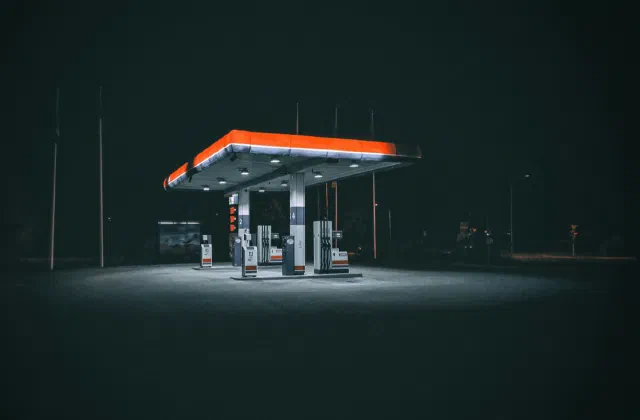
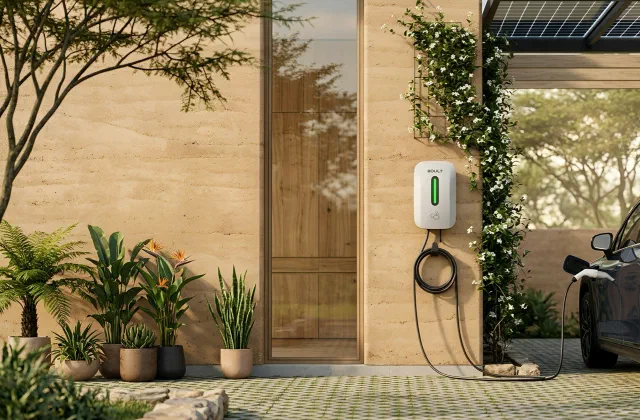
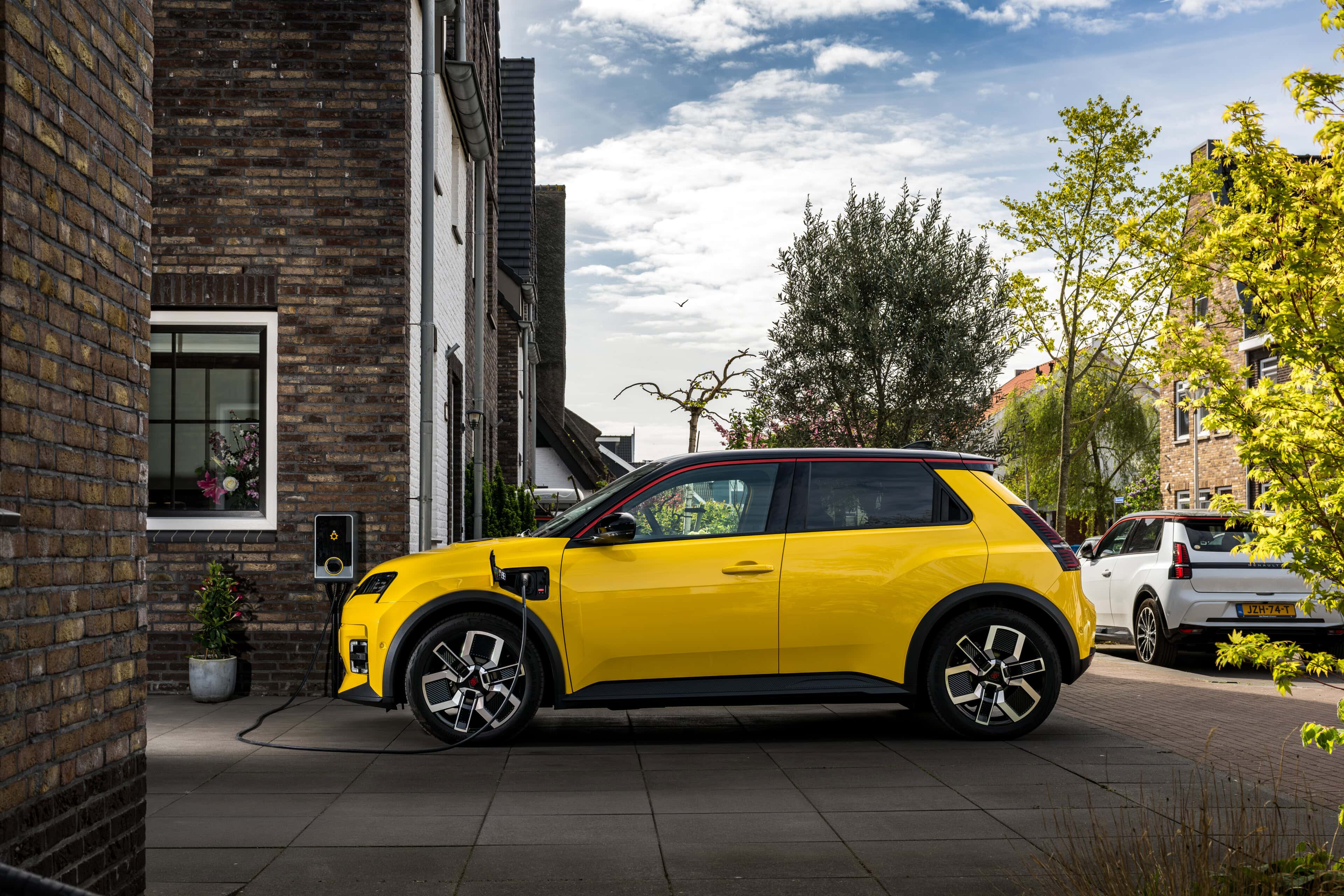
Co-planning charging infrastructure with the wider power system shows that smart charging (V1G) captures most of the system value while vehicle-to-grid (V2G) earns its keep through balancing markets. The value differs greatly by country, so uniform EU charger targets should be reconsidered.
Francesco Sanvito, Francesco Lombardi, Stefan Pfenninger-Lee (2026).
Coordinated Planning of European Charging Infrastructure and Energy System for Optimal V1G and V2G Deployment. Nature Energy.
doi: 10.1038/s41560-026-02107-5
IPCC Summaries for Policymakers have not become more solution-oriented through time. For that to happen, the IPCC may need to re-think its policy-neutrality principle.
Ema Gusheva, Johan Lilliestam, Franziska Bock, ..., Fei Wu, Stefan Pfenninger-Lee (2026).
Content Analysis of IPCC Summaries for Policymakers 2001-2022: No Shift towards Policy Solutions. npj Climate Action.
doi: 10.1038/s44168-026-00391-1
Modelling energy system transition pathways over many decades introduces distinct methodological pitfalls. This study maps those challenges and how modelling choices shape the optimal pathways that emerge.
Ivan Ruiz Manuel, Meijun Chen, Francesco Lombardi, Stefan Pfenninger-Lee (2026).
Optimising for the Long Game: Methodological Challenges in Energy System Optimisation Pathways. Applied Energy.
doi: 10.1016/j.apenergy.2026.127980
Less affluent European countries may need substantial household-level financing to support their heating transition and to diversify their net-zero energy technology choices.
Meijun Chen, Francesco Sanvito, Jan Kwakkel, Stefan Pfenninger-Lee (2026).
Accounting for Economic Disparity in Designing Net-Zero European Energy Systems. Environmental Research: Energy.
doi: 10.1088/2753-3751/ae6b8f
Getty Images (Josh Smith / Ascent Xmedia)
Research paper
Brazil can achieve deep decarbonization through the strategic expansion of wind, solar, and biofuels, while simultaneously protecting conservation areas and promoting reforestation, to benefit both climate and biodiversity.
Paula Conde Santos Borba, Wilson Cabral de Sousa, Stefan Pfenninger (2025).
Land Conservation and Large-Scale Renewable Energy Systems Are Simultaneously Possible in Brazil. One Earth.
doi: 10.1016/j.oneear.2025.101520
Interviews with energy modellers reveal a spectrum of beliefs about truth, objectivity and the purpose of scenarios, with implications for how model results should be produced and communicated.
Franziska Bock and Stefan Pfenninger-Lee (2025).
Rarely Pure and Never Simple: Exploring Perceptions of Truth and Objectivity in Energy Modelling and Scenarios. Energy Research & Social Science.
doi: 10.1016/j.erss.2025.104229
A human-in-the-loop modelling-to-generate-alternatives approach lets stakeholders steer the search for energy system designs so the options produced actually match their needs.
Francesco Lombardi and Stefan Pfenninger (2025).
Human-in-the-Loop MGA to Generate Energy System Design Options Matching Stakeholder Needs. PLOS Climate.
doi: 10.1371/journal.pclm.0000560
Integrated assessment modelling plays an influential role in IPCC assessments, yet so far has been led by a small group of mostly male researchers working primarily in Western Europe and the USA.
Ema Gusheva, Stefan Pfenninger, Johan Lilliestam (2024).
Past Peak Prominence: The Changing Role of Integrated Assessment Modeling in the IPCC. iScience.
doi: 10.1016/j.isci.2024.111213
Minor tweaks to model parameters and structure, plus tuning of solver settings, can dramatically improve the solution time of large linear energy system models.
Manuel Bröchin, Bryn Pickering, Tim Tröndle, Stefan Pfenninger (2024).
Harder, Better, Faster, Stronger: Understanding and Improving the Tractability of Large Energy System Models. Energy, Sustainability and Society.
doi: 10.1186/s13705-024-00458-z
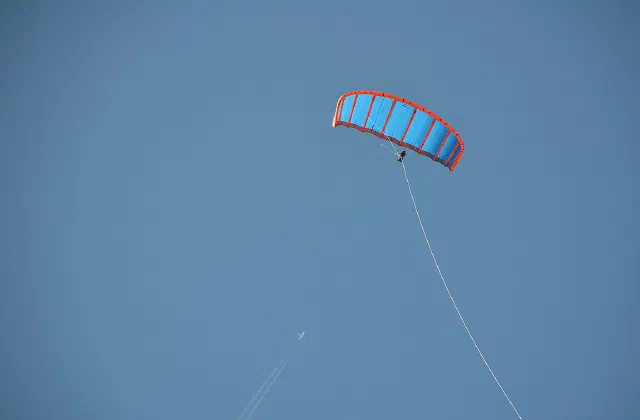
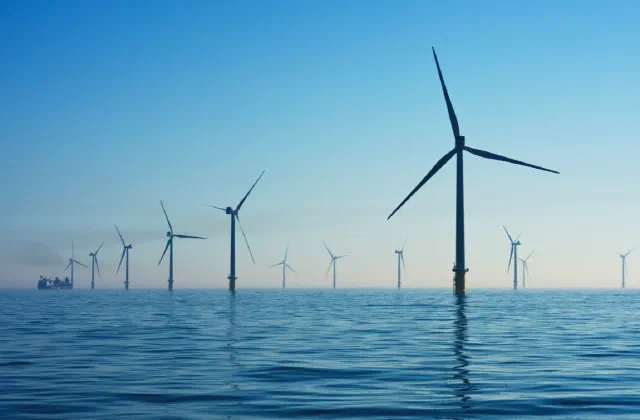
Novel wind technologies, in particular airborne wind energy (AWE) and floating offshore wind turbines, have the potential to unlock untapped wind resources and contribute to power system stability in unique ways.
Hidde Vos, Francesco Lombardi, Rishikesh Joshi, Roland Schmehl, Stefan Pfenninger (2024).
The Potential Role of Airborne and Floating Wind in the North Sea Region. Environmental Research: Energy.
doi: 10.1088/2753-3751/ad3fbc
Open code and data is not enough. Energy system models should be designed for understandability, and one way to do so is through increased modularity.
Stefan Pfenninger (2024).
Open Code and Data Are Not Enough: Understandability as Design Goal for Energy System Models. Progress in Energy.
doi: 10.1088/2516-1083/ad371e
Untapped ancillary bioenergy could ease Europe's growing import dependency, but inconsistent definitions of "sustainable bioenergy" keep model results from translating into policy.
Fei Wu and Stefan Pfenninger (2023).
Challenges and Opportunities for Bioenergy in Europe: National Deployment, Policy Support, and Possible Future Roles. Bioresource Technology Reports.
doi: 10.1016/j.biteb.2023.101430
When running modelling to generate alternatives, some solutions are informative, while some are redundant. Knowing which is which cuts the cost of exploring alternative options.
Francesco Lombardi, Bryn Pickering, Stefan Pfenninger (2023).
What Is Redundant and What Is Not? Computational Trade-Offs in Modelling to Generate Alternatives for Energy Infrastructure Deployment. Applied Energy.
doi: 10.1016/j.apenergy.2023.121002
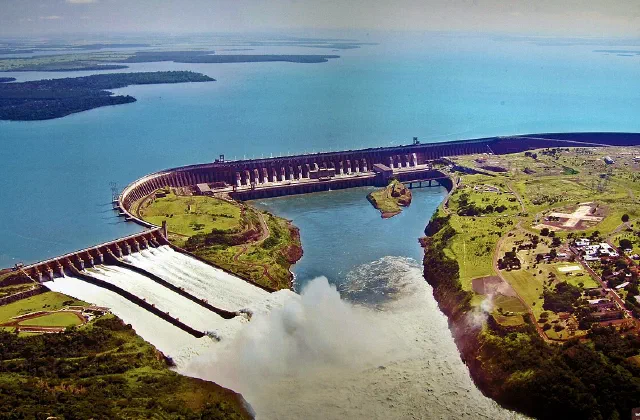
Pairing offshore wind with hydropower in Brazil can buffer drought risk and strengthen energy security as the climate shifts.
Paula Conde Santos Borba, Wilson C. Sousa, Milad Shadman, Stefan Pfenninger (2023).
Enhancing Drought Resilience and Energy Security through Complementing Hydro by Offshore Wind Power—The Case of Brazil. Energy Conversion and Management.
doi: 10.1016/j.enconman.2022.116616
In a fossil-free 2050 Europe, limited bioenergy delivers the most value when directed strategically to the hardest-to-decarbonise niches rather than spread thinly across the system.
Fei Wu, Adrian Muller, Stefan Pfenninger (2023).
Strategic Uses for Ancillary Bioenergy in a Carbon-Neutral and Fossil-Free 2050 European Energy System. Environmental Research Letters.
doi: 10.1088/1748-9326/aca9e1
An active deep learning approach improves spatio-temporal electricity load forecasts while requiring substantially less training data.
Arsam Aryandoust, Anthony Patt, Stefan Pfenninger (2022).
Enhanced Spatio-Temporal Electric Load Forecasts Using Less Data with Active Deep Learning. Nature Machine Intelligence.
doi: 10.1038/s42256-022-00552-x
Exploring a wide range of near-optimal solutions shows Europe can reach carbon neutrality through highly diverse system designs, giving policymakers space to choose.
Bryn Pickering, Francesco Lombardi, Stefan Pfenninger (2022).
Diversity of Options to Eliminate Fossil Fuels and Reach Carbon Neutrality across the Entire European Energy System. Joule.
doi: 10.1016/j.joule.2022.05.009
A century of reanalysis data shows that transmission expansion and weather-informed siting can substantially smooth Europe's renewable-generation variability.
Jan Wohland, David J. Brayshaw, Stefan Pfenninger (2021).
Mitigating a Century of European Renewable Variability with Transmission and Informed Siting. Environmental Research Letters.
doi: 10.1088/1748-9326/abff89
The SPORES method generates spatially explicit, near-optimal alternatives to give decision-makers a far richer menu of where to deploy energy infrastructure.
Francesco Lombardi, Bryn Pickering, Emanuela Colombo, Stefan Pfenninger (2020).
Policy Decision Support for Renewables Deployment through Spatially Explicit Practically Optimal Alternatives. Joule.
doi: 10.1016/j.joule.2020.08.002
Achieving a fully renewable European electricity system involves trade-offs between the geographic scale of cooperation, total cost, and the infrastructure required.
Tim Tröndle, Johan Lilliestam, Stefano Marelli, Stefan Pfenninger (2020).
Trade-Offs between Geographic Scale, Cost, and Infrastructure Requirements for Fully Renewable Electricity in Europe. Joule.
doi: 10.1016/j.joule.2020.07.018
Combining rooftop photovoltaics with an electric vehicle can make individual households energy self-sufficient even in a temperate climate.
Ursin Gstöhl and Stefan Pfenninger (2020).
Energy Self-Sufficient Households with Photovoltaics and Electric Vehicles Are Feasible in Temperate Climate. PLOS ONE.
doi: 10.1371/journal.pone.0227368
In complex terrain, wind power output varies sharply at sub-national scales, and exploiting this fact could help balance renewable power grids.
Bryn Pickering, Christian M. Grams, Stefan Pfenninger (2020).
Sub-National Variability of Wind Power Generation in Complex Terrain and Its Correlation with Large-Scale Meteorology. Environmental Research Letters.
doi: 10.1088/1748-9326/ab70bd
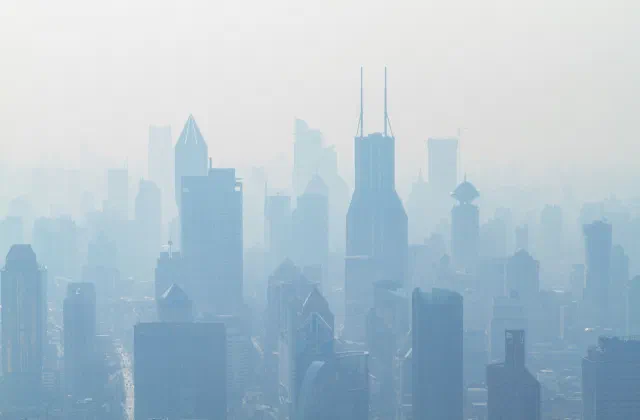
Decades of air pollution have dimmed the sunlight reaching China's surface, and returning to the cleaner skies of the 1960s would substantially increase the country's photovoltaic electricity generation.
Bart Sweerts, Stefan Pfenninger, Su Yang, Doris Folini, Bob van der Zwaan, Martin Wild (2019).
Estimation of Losses in Solar Energy Production from Air Pollution in China since 1960 Using Surface Radiation Data. Nature Energy.
doi: 10.1038/s41560-019-0412-4
Mykola Mazuryk/colorbox.de and Gisela Zechner/pixelio.de
Research paper
Across CMIP5 climate projections, European photovoltaic output remains robust, making solar a no-regrets investment regardless of climate change.
Johannes Müller, Doris Folini, Martin Wild, Stefan Pfenninger (2019).
CMIP-5 Models Project Photovoltaics Are a No-Regrets Investment in Europe Irrespective of Climate Change. Energy.
doi: 10.1016/j.energy.2018.12.139
Calliope is our open-source framework for building energy system models at any scale, from districts to continents, with human-readable model definitions designed for openness and reproducibility.
Stefan Pfenninger and Bryn Pickering (2018).
Calliope: A Multi-Scale Energy Systems Modelling Framework. Journal of Open Source Software.
doi: 10.21105/joss.00825
Britain's electricity system is moving from being demand-driven to weather-driven. As wind, solar and electrified heating grow, planning with single years of weather data becomes increasingly risky.
Iain Staffell and Stefan Pfenninger (2018).
The Increasing Impact of Weather on Electricity Supply and Demand. Energy.
doi: 10.1016/j.energy.2017.12.051
A practical how-to guide for opening up energy models, from choosing licences to publishing code and data and building a community, based on the collective experience of the Open Energy Modelling Initiative.
Stefan Pfenninger, Lion Hirth, Ingmar Schlecht, ..., Tim Tröndle, Clemens Wingenbach (2018).
Opening the Black Box of Energy Modelling: Strategies and Lessons Learned. Energy Strategy Reviews.
doi: 10.1016/j.esr.2017.12.002
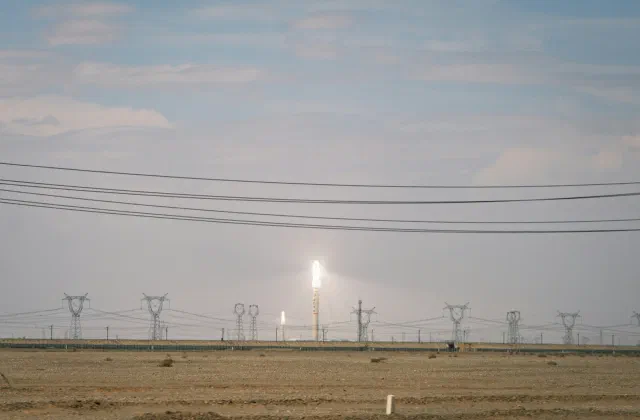
Concentrating solar power shows a learning rate of 20%, and with continued stable policy support, each doubling of capacity makes dispatchable solar power substantially cheaper.
Johan Lilliestam, Mercè Labordena, Anthony Patt, Stefan Pfenninger (2017).
Empirically Observed Learning Rates for Concentrating Solar Power and Their Responses to Regime Change. Nature Energy.
doi: 10.1038/nenergy.2017.94
There is no one-size-fits-all method for reducing the time resolution of energy models, and relying on a single year of weather data can substantially distort planning results.
Stefan Pfenninger (2017).
Dealing with Multiple Decades of Hourly Wind and PV Time Series in Energy Models: A Comparison of Methods to Reduce Time Resolution and the Planning Implications of Inter-Annual Variability. Applied Energy.
doi: 10.1016/j.apenergy.2017.03.051
Energy policy research lags behind other fields in openly sharing code and data, undermining the quality, productivity and policy credibility of its analyses.
Stefan Pfenninger, Joseph DeCarolis, Lion Hirth, Sylvain Quoilin, Iain Staffell (2017).
The Importance of Open Data and Software: Is Energy Research Lagging Behind?. Energy Policy.
doi: 10.1016/j.enpol.2016.11.046
Weather reanalysis data can overestimate national wind power output by 50% or more, but after bias correction it simulates hourly output with high accuracy. These simulations are freely available through Renewables.ninja.
Iain Staffell and Stefan Pfenninger (2016).
Using Bias-Corrected Reanalysis to Simulate Current and Future Wind Power Output. Energy.
doi: 10.1016/j.energy.2016.08.068
Validated against measurements from over 1000 PV systems, 30 years of hourly simulations reveal the long-term patterns of European solar output. The data are freely available through Renewables.ninja.
Stefan Pfenninger and Iain Staffell (2016).
Long-Term Patterns of European PV Output Using 30 Years of Validated Hourly Reanalysis and Satellite Data. Energy.
doi: 10.1016/j.energy.2016.08.060
Renewables, nuclear, or fossil fuels? Scenarios for Great Britain show no option wins on cost, emissions and import dependency at once. Choosing a power system means choosing trade-offs.
Stefan Pfenninger and James Keirstead (2015).
Renewables, Nuclear, or Fossil Fuels? Scenarios for Great Britain's Power System Considering Costs, Emissions and Import Dependency. Applied Energy.
doi: 10.1016/j.apenergy.2015.04.102
For South Africa's growing power system, concentrating solar power with storage could rival nuclear as a low-carbon baseload provider, while offering more operational flexibility.
Stefan Pfenninger and James Keirstead (2015).
Comparing Concentrating Solar and Nuclear Power as Baseload Providers Using the Example of South Africa. Energy.
doi: 10.1016/j.energy.2015.04.077
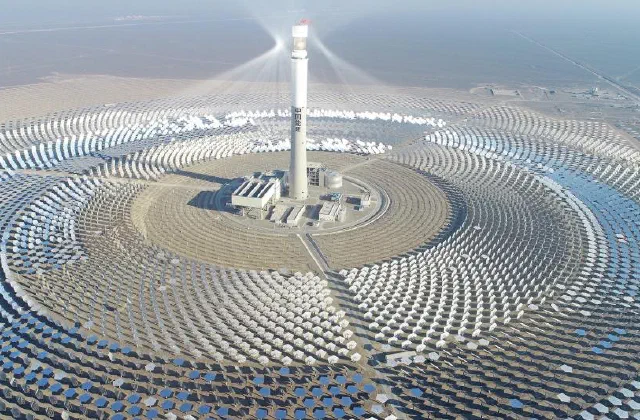
Interconnected fleets of concentrating solar power plants could deliver dispatchable, baseload-like renewable electricity in sun-rich regions such as the Mediterranean and southern Africa.
Stefan Pfenninger, Paul Gauché, Johan Lilliestam, Kerstin Damerau, Fabian Wagner, Anthony Patt (2014).
Potential for Concentrating Solar Power to Provide Baseload and Dispatchable Power. Nature Climate Change.
doi: 10.1038/nclimate2276
Energy systems models face four twenty-first-century challenges: resolving detail in time and space, capturing uncertainty, addressing growing complexity, and integrating human behaviour.
Stefan Pfenninger, Adam Hawkes, James Keirstead (2014).
Energy Systems Modeling for Twenty-First Century Energy Challenges. Renewable and Sustainable Energy Reviews.
doi: 10.1016/j.rser.2014.02.003